
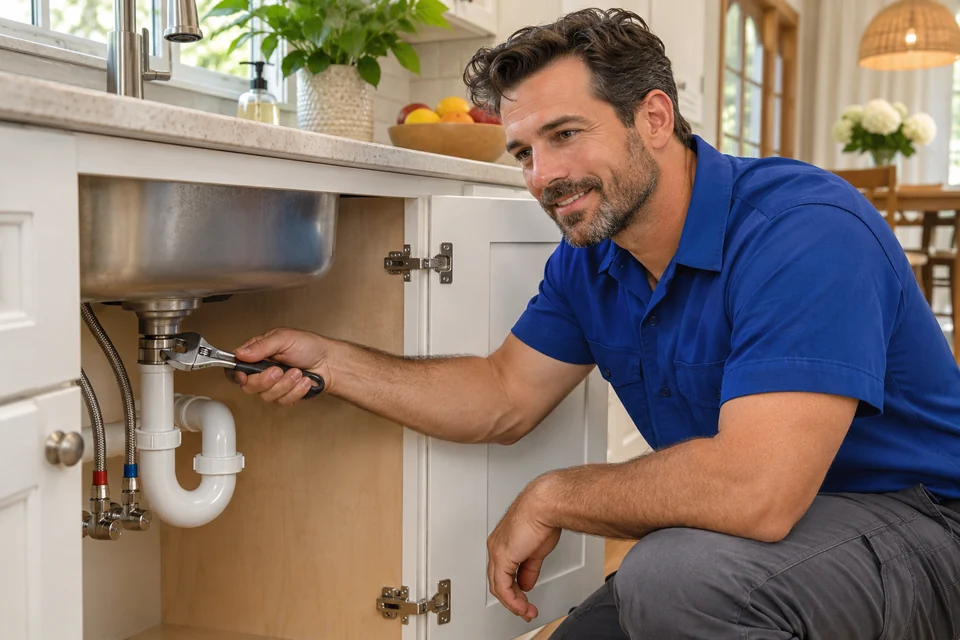
Start with the pattern, not a guessed repair
Tell the provider whether one fixture or several are affected, when the symptom began, and whether it happens constantly or during use. These details help shape an inspection, but a phone conversation cannot establish the condition of concealed piping or confirm a final repair.
A bathroom faucet with weak flow calls for different checks than a whole house losing pressure. Keep any previous service notes and recent water bills available. Mention recent remodeling, appliance changes, or utility work so the provider can consider the full sequence of events.
Repair the problem and understand the next step
A useful assessment identifies the failed component, explains the proposed work, and separates immediate repairs from optional improvements. Ask whether an isolated repair is practical and what evidence would support replacing a longer section of pipe or an entire fixture instead.
Access can matter as much as the part being replaced. Pipes behind a wall, beneath a floor, or in a tight crawlspace may require additional work. Clarify who handles openings, patching, and cleanup before approving the job so the written scope reflects the whole project.
Build a practical home maintenance record
Keep repair records, product model numbers, and recurring symptoms together. Photos taken safely can document a visible leak before it changes. Never enter standing water near electrical equipment or open a wall just to investigate a suspected problem.
Water conservation starts with noticing small changes. EPA identifies dripping faucets and worn toilet components as common sources of household leaks. A repaired fixture should be checked during normal use, and a recurring wet spot deserves another assessment rather than being dismissed as leftover moisture.
What happens next?
Describe your home
Call with your Austell address, affected fixtures, and observed changes.
Confirm the appointment
Discuss provider availability, visit charges, and access to affected areas.
Review the scope
Approve the proposed work and price directly with your provider.
What can affect the cost?
Residential plumbing costs depend on the diagnosis, access, parts, and extent of repair. A visible connection repair and concealed pipe replacement involve different labor and restoration needs. Ask the provider for an estimate identifying diagnostic charges, materials, applicable permit responsibilities, and excluded work. If inspection changes the scope, request an updated explanation and price before authorizing any additional plumbing work.